
Lower Basin States Offer New Colorado River Plan as Hoover Dam Faces Power Crisis
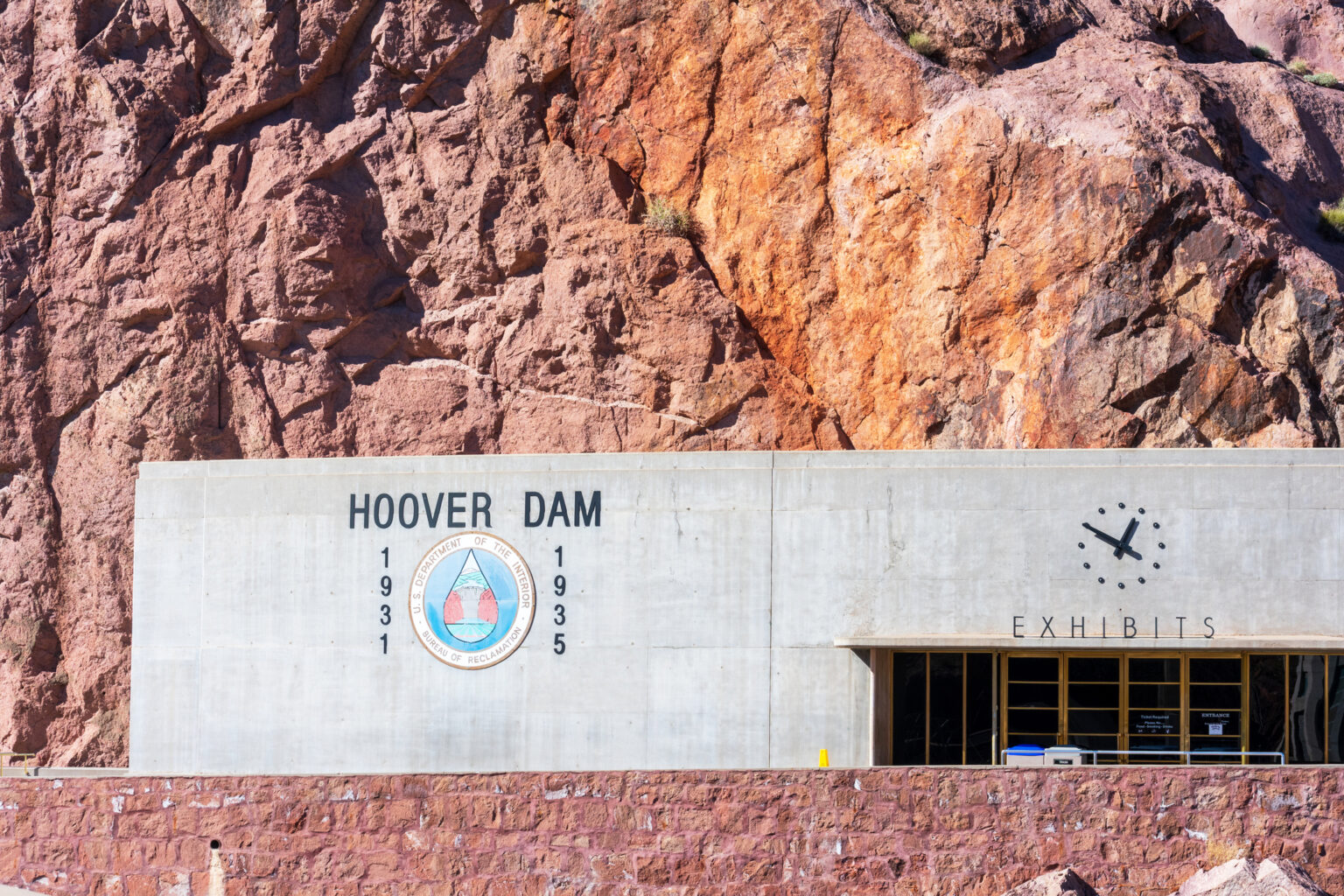
The Lower Basin proposal promises up to 3.2 million acre-feet in savings through 2028, even as aging turbines at Hoover Dam edge toward a breaking point.
Nevada, California and Arizona on Friday announced a new short-term proposal to stabilize the Colorado River through 2028, offering up to 3.2 million acre-feet in water savings as federal water managers simultaneously warned that Hoover Dam could lose roughly 40 percent of its hydroelectric output as soon as this fall. The announcement arrives with the river's current operating guidelines set to expire at the end of the year and negotiations between Upper and Lower Basin states still unresolved.
Lower Basin States Step Up With New Proposal
The Lower Colorado River Basin states of Nevada, California and Arizona released the proposal Friday, framing it as a move from discussion to action in a prolonged standoff over how to manage the river's dwindling supply. The plan would deliver up to 3.2 million acre-feet of water savings through 2028, a significant increase over a previous Lower Basin proposal that called for a 1.25 million acre-feet reduction per year in 2027 and 2028.
John Entsminger, general manager of the Southern Nevada Water Authority, said in the release that the proposal 'pairs real measurable water contributions with sensible dry-condition operations at Lake Powell and across the Upper Initial Units.' He added that 'now is the time for every water user in the Basin to double down on water conservation as we face historically dry hydrology.'
The Lower Basin states said they remain open to the Upper Basin group's call for third-party mediation, but argued that 'current conditions require immediate, measurable water reductions from every state.' The Upper Basin group, which includes Colorado, Utah, New Mexico and Wyoming, had called for third-party intervention last month as talks toward a new operating framework continued.
The proposal preserves legal accountability under the Colorado River Compact, including Upper Basin delivery obligations, according to the release. Implementation of key elements, including expanded system conservation, will require federal partnership. The plan also remains subject to approval by the Arizona Legislature and relevant California and Nevada water agency governing boards.
Hoover Dam's Turbine Problem Is Getting Worse
The political urgency behind the new proposal is inseparable from the physical reality at Hoover Dam. The Bureau of Reclamation's recent emergency announcement included a warning that lower flows out of Lake Powell could reduce the dam's hydroelectric power generation by about 40 percent as soon as this fall. Projections show Lake Mead could fall nearly 30 feet over the next two years, more than 8 feet past the 2022 record low.
The dam's turbine situation has been deteriorating for years. When the water level reaches 1,035 feet above sea level, only five of the dam's 17 turbines can generate power, according to Eric Witkoski, executive director of the Colorado River Commission of Nevada. One of those five is currently out of commission for repairs. Older turbines cannot operate without risking cavitation, a process in which vapor bubbles generated by pressure changes collapse and damage the mechanism.
Congress authorized the release of $52 million in federal funds this year to address the turbine problem, after the money had been suspended in a federal account. Witkoski said the funds are still being held up, however. 'We've heard positive signs, but it's a little hard to plan until we actually know those funds are there,' he said.
Even if funding clears, the timeline for repairs is long. The first project, adding two new turbines, cannot be completed until October 2028 at the earliest and must still go through procurement, testing and design phases. Repairing the broken turbine has a target date of September 2029, and adding two more turbines could take until 2031, depending on available funding. 'These things are specially built,' Witkoski said. 'You can't just go to GE and tell them you need a turbine.'
Real Costs for Real Customers
The power shortfall is already translating into higher costs for utilities that depend on Hoover Dam. Dane Bradfield, general manager of the Lincoln County Power District No. 1, which serves roughly 2,000 largely agricultural users in a rural Southern Nevada county northeast of Las Vegas, said his district once relied on the dam to meet all its power needs. Today, it can meet about 70 percent of demand.
'If we go out to the market and purchase these other resources, it's at a higher price,' Bradfield said. 'Unfortunately, those prices are passed on to our customers.' The cost structure compounds the problem: as energy delivery from the dam decreases, fixed charges for maintenance and operations remain in place, driving up per-unit rates.
The Metropolitan Water District of Southern California, one of Hoover Dam's largest customers, uses hydropower to run roughly half the needs of the Colorado River Aqueduct. Shane Chapman, the district's assistant general manager of operations, said he hopes the short-term pain proves worth building long-term sustainability at the dam.
What we know
- Nevada, California and Arizona announced a proposal Friday to deliver up to 3.2 million acre-feet of water savings through 2028.
- The current operating guidelines for the Colorado River expire at the end of the year.
- An estimated 40 million people depend on the Colorado River for their water supply.
- The Bureau of Reclamation warned that lower flows out of Lake Powell could reduce Hoover Dam's hydroelectric power generation by about 40 percent as soon as this fall.
- Lake Mead could fall nearly 30 feet in the next two years, more than 8 feet past the 2022 record low, according to projections.
- When the water level at Hoover Dam reaches 1,035 feet above sea level, only five of the dam's 17 turbines can generate power, and one of those five is currently out of commission for repairs.
- Congress authorized the release of $52 million in federal funds this year for turbine work at Hoover Dam, but those funds are still being held up according to Eric Witkoski of the Colorado River Commission of Nevada.
- The first turbine upgrade project cannot be completed until October 2028 at the earliest; repairing the broken turbine has a target date of September 2029.
The take
The Colorado River has been managed under a framework built in the early 1920s, when flow estimates were far more optimistic than the river's actual long-term average. Decades of overallocation, combined with a prolonged drought that climate scientists have linked to broader aridification of the Southwest, have pushed Lake Mead and Lake Powell to levels that were once considered theoretical worst-case scenarios. The current impasse between Upper and Lower Basin states reflects a structural tension baked into the Colorado River Compact: Upper Basin states are obligated to deliver a set volume of water downstream, but they have limited tools to force conservation across their own users, while Lower Basin states have historically consumed close to their full allocations. Short-term proposals like Friday's are a familiar pattern in Colorado River politics, where the urgency of a crisis produces incremental agreements that buy time without resolving the underlying mismatch between supply and demand. The Hoover Dam turbine situation adds a layer of infrastructure vulnerability that is less often discussed in water-rights negotiations but is increasingly central to the region's energy security. Hydropower from the dam has historically been among the cheapest electricity available to utilities across Nevada, Arizona and California; losing a significant share of that output forces those utilities into spot markets at precisely the moment when Western power prices are elevated. The repair timeline stretching to 2031 means the region will be managing this constraint for years regardless of how quickly a new river compact is reached.
Why it matters
For Southern Nevada residents, the Colorado River debate is not an abstract policy dispute. Lake Mead is the source of roughly 90 percent of the Las Vegas Valley's drinking water, and Hoover Dam supplies power to utilities serving rural and urban communities across the region. A failure to reach a durable agreement before the current operating guidelines expire at year's end could trigger automatic shortage tiers that force deeper cuts to Nevada's water allocation, while the dam's deteriorating turbine capacity threatens to raise electricity costs for thousands of customers who have few alternatives.
What’s next
The Bureau of Reclamation has indicated that more modeling on the extent of Hoover Dam's power generation declines is expected in May. The Lower Basin proposal still requires approval from the Arizona Legislature and relevant governing boards in California and Nevada before it can move forward. The first turbine upgrade at Hoover Dam cannot be completed until October 2028 at the earliest, with additional repair work targeted for 2029 and potentially extending to 2031.
Frequently asked questions
What is the Lower Basin states' new Colorado River proposal?
Nevada, California and Arizona announced a plan Friday to deliver up to 3.2 million acre-feet of water savings through 2028, an increase over a previous proposal that called for a 1.25 million acre-feet reduction per year in 2027 and 2028.
How much could Hoover Dam's power output drop?
The Bureau of Reclamation warned that lower flows out of Lake Powell could reduce Hoover Dam's hydroelectric power generation by about 40 percent as soon as this fall.
Why can't Hoover Dam run all its turbines?
When the water level reaches 1,035 feet above sea level, only five of the dam's 17 turbines can generate power; older turbines risk cavitation damage at low reservoir levels. One of those five is currently out of commission for repairs.
When will Hoover Dam's turbine repairs be finished?
The first project, adding two new turbines, cannot be completed until October 2028 at the earliest. Repairing the broken turbine has a target date of September 2029, and additional turbine additions could take until 2031 depending on funding.
How many people depend on the Colorado River for water?
An estimated 40 million people depend on the Colorado River for their water supply, according to reporting on the ongoing negotiations.