
Fewer Flights, More Gambling: Las Vegas March Numbers Tell a Split Story
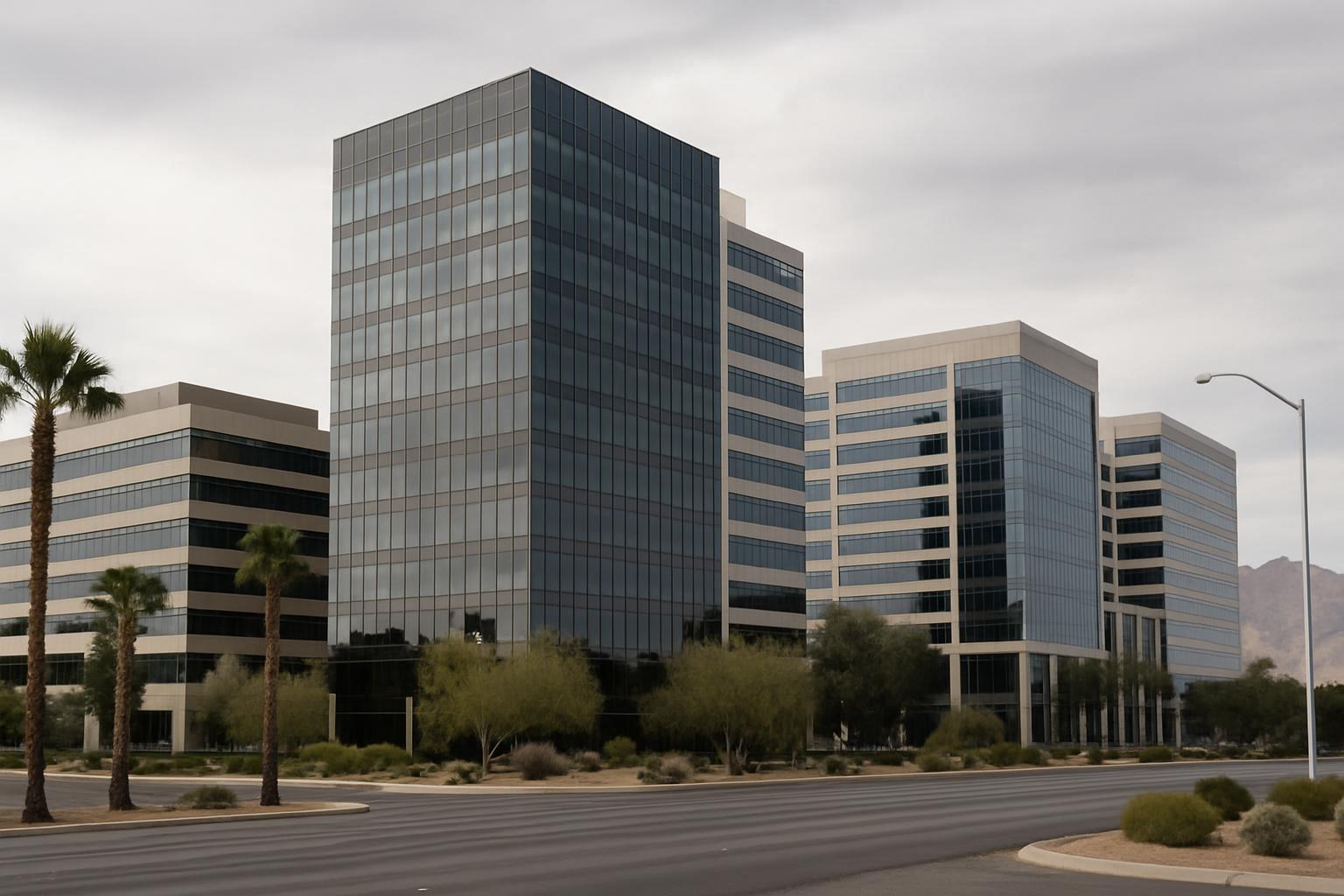
Airport traffic is down more than 5% year-to-date, yet casinos on the Strip, Downtown, and the Boulder Strip are all posting double-digit revenue gains.
Las Vegas closed out March with a notable contradiction: passenger volume through Harry Reid International Airport dropped 4.2% compared to the same month last year, pushing the year-to-date decline to 5.14%, while statewide gaming wins climbed 11.78% over March 2025. Convention attendance surged more than 30%, and visitor volume edged up 1.9%, driven by major events including the NASCAR Pennzoil 400, college basketball conference tournaments, March Madness, and the CONEXPO tradeshow.
Gaming Revenue Rises Across the Valley
The strongest gains in gaming revenue came from areas outside the resort corridor. Downtown Las Vegas posted roughly a 20% increase, the Boulder Strip rose approximately 15%, and the Las Vegas Strip itself was up about 15% compared to March of last year, according to state figures released this week.
Those numbers align with what casino operators have been telling investors. Boyd Gaming CEO and President Keith Smith noted an 11% year-over-year decline in pedestrian traffic around the Fremont Street Experience, but framed the situation cautiously. 'The good news is the decline in visitation did not accelerate. It was stable,' Smith said. He added that Las Vegas has historically seen roughly 50% to 55% of all visitors make their way downtown and expressed confidence that pattern would continue.
Locals Casinos Absorb the Slack as Destination Travel Softens
Smith offered a straightforward explanation for the divergence between falling air traffic and rising gaming revenue: more visitors are driving from nearby states rather than flying in. That dynamic benefits locals-oriented properties, which have continued to post strong results even as destination travel softens.
Red Rock Resorts Executive Vice President and Chief Administration Officer Stephen Cootey reinforced that point, noting that 87% of the company's hotel guests are generally out-of-town visitors who drive from regional states. 'The air travel, given the fact while 87% of our hotel guests are generally out of town, the majority of these folks are driving from the regional states so the TSA impact has been minimal,' Cootey said. He also reported no impact from higher gas prices in April, calling it early days for assessing that variable.
International Headwinds, Particularly From Canada
MGM Resorts International CEO and President Bill Hornbuckle was direct about one specific pressure point. 'The noise around Canada is real. Our general Canadian business is down 30% to 40%. We hope to improve that,' Hornbuckle said during the company's most recent earnings call. He noted that MGM has conducted outreach missions into Canada through its convention center and has another planned for later this summer, one he intends to attend personally.
Hornbuckle also pointed to Mexico as a relative bright spot, saying the market opened up meaningfully with increased air traffic a few years ago. The broader international picture, however, remains a drag on destination-oriented properties that depend on long-haul visitors.
Caesars Sees a Path Forward Despite a Tough Comparison Period
Caesars Entertainment CEO Tom Reeg acknowledged that the company will likely fall just short of last year's performance in the near term but described the trajectory as healthier than it has been. 'Our bookings feel good,' Reeg said, adding that the company is cycling into comparisons against what he described as a tough summer in Las Vegas last year.
Across the major operators, MGM, Caesars, Boyd Gaming, and Red Rock Resorts all stated they do not believe gas prices will be a significant factor in driving visitation or gaming activity at their properties. Smith summarized the collective posture: 'We remain confident in the underlying strength of the Las Vegas economy.'
Failed Ferris Wheel Site Finds a New Owner With Big Plans
Separately, a long-dormant eyesore on the south end of the Strip changed hands this week. Developer Eli Applebaum purchased the site of the never-completed SkyVue observation wheel project, acquiring nearly 12 acres along Las Vegas Boulevard, across from Mandalay Bay, for $70 million. The sale closed Monday, according to property records.
The parcel includes vacant land, several small buildings, and the two large concrete columns that have stood unfinished for more than a decade, visible reminders of a project that ran into financial trouble before it was ever completed. Applebaum confirmed the purchase Wednesday and described the land as a great piece of property, though he acknowledged its reputation. 'But what it's known for is not great,' he said.
Applebaum's plans call for a hotel-casino tower with a heart-shaped facade covered by a massive LED screen, along with a midair restaurant that would incorporate the existing towers, according to Clark County records. He said he believes the LED screen would draw visitors to take pictures and generate online attention, with advertisers potentially buying space on the digital panel. The sky restaurant, he said, would move forward if he secured the right operator.
Listing broker Michael Parks of CBRE Group, a hotel-casino specialist, described Applebaum as a longtime Las Vegas-based real estate investor and developer with projects around the country. Parks noted that interest in the site accelerated after the Athletics began construction on their $2 billion baseball stadium nearby. He also cited challenges including the leftover pillars and height and use restrictions tied to the property's proximity to Harry Reid International Airport.
The original SkyVue project was conceived by developer Howard Bulloch of Compass Investments, who envisioned a $100 million-plus development featuring a 500-foot observation wheel, a roller coaster, and retail and restaurant space. The project was announced in 2011 and reported its first phase of construction complete in 2012, but it never advanced further. The site eventually went through a bankruptcy auction in 2020.
What we know
- Harry Reid International Airport processed 4,642,207 passengers in March, down 4.2% compared to the prior year. Year-to-date passenger numbers are down 5.14%.
- Statewide gaming wins for March were up 11.78% compared to March 2025.
- Downtown Las Vegas gaming revenue rose approximately 20%, the Boulder Strip approximately 15%, and the Las Vegas Strip approximately 15% year-over-year.
- Convention attendance in Las Vegas was up more than 30% in March, and overall visitor volume rose 1.9% compared to the same period last year.
- MGM Resorts CEO Bill Hornbuckle said Canadian business is down 30% to 40%, and MGM has planned outreach missions to Canada including one Hornbuckle will attend later this summer.
- Boyd Gaming CEO Keith Smith reported an 11% year-over-year decline in pedestrian traffic around the Fremont Street Experience.
- Developer Eli Applebaum purchased the SkyVue site on the south Las Vegas Strip, nearly 12 acres across from Mandalay Bay, for $70 million. The sale closed Monday.
- Applebaum's plans for the site include a hotel-casino tower with a heart-shaped facade covered by a massive LED screen and a midair restaurant incorporating the existing concrete towers, per Clark County records.
The take
The gap between falling air passenger counts and rising gaming revenue is less paradoxical than it appears. Las Vegas has always drawn from two distinct pools: fly-in destination visitors and drive-market regulars from California, Arizona, and Utah. When long-haul travel softens, whether due to international friction, economic uncertainty, or reduced airline capacity, the drive market tends to compensate, particularly for locals-oriented and mid-tier properties. That pattern has played out in previous cycles, including during periods of high fuel prices and after the 2008 financial crisis, when regional gaming held up better than Strip-dependent revenue.
The Canadian softness Hornbuckle described fits a broader pattern of cross-border travel sensitivity to political and economic friction. Canada has historically been one of the top international source markets for Las Vegas, and a 30% to 40% decline in that segment is meaningful for large integrated resorts that depend on premium international play.
On the SkyVue site, the $70 million sale price and the LED-screen hotel concept reflect how the south Strip's development calculus has shifted since the Athletics stadium broke ground. That corridor had long been considered underutilized relative to the central Strip, partly because of airport height restrictions and partly because of the blighted SkyVue columns themselves. A heart-shaped LED facade is an unconventional architectural bet, but the logic of building a social-media-friendly landmark in a city that runs on visual spectacle is not hard to follow.
Why it matters
For Las Vegas, the March data reinforces that the market's resilience increasingly depends on domestic drive-in visitors and convention business rather than international or fly-in leisure travel. That shift has real implications for how the city markets itself and how operators staff and price their properties. Meanwhile, the SkyVue sale signals renewed developer confidence in the south Strip, a stretch that has lagged the corridor's core for years. If the Athletics stadium catalyzes further investment in that area, it could meaningfully reshape the southern end of Las Vegas Boulevard over the next decade.
What’s next
MGM Resorts CEO Bill Hornbuckle has a planned outreach mission to Canada later this summer aimed at recovering lost Canadian business. On the SkyVue site, Applebaum's hotel-casino project will require further review through Clark County's approval process before construction can begin. No groundbreaking date has been announced.
Frequently asked questions
How many passengers flew through Harry Reid International Airport in March 2025?
4,642,207 passengers passed through Harry Reid International Airport in March, a figure that is down 4.2% compared to the same month the prior year.
Which Las Vegas gaming areas saw the biggest revenue increases in March?
Downtown Las Vegas led with approximately a 20% increase, while the Boulder Strip and the Las Vegas Strip each rose about 15% compared to March of the prior year.
Who bought the old SkyVue Ferris wheel site in Las Vegas?
Developer Eli Applebaum purchased the site for $70 million. He is described by listing broker Michael Parks of CBRE as a longtime Las Vegas-based real estate investor and developer.
What is planned for the SkyVue site on the Las Vegas Strip?
Applebaum has drawn up plans for a hotel-casino tower with a heart-shaped facade covered by a massive LED screen, along with a midair restaurant that would incorporate the two existing concrete columns, according to Clark County records.
Why is Canadian tourism to Las Vegas down?
MGM Resorts CEO Bill Hornbuckle said Canadian business is down 30% to 40%, attributing it to what he called real noise around Canada, though he did not specify a single cause. MGM has conducted outreach missions to Canada and has another planned for later this summer.